About this expedition
Serengeti National Park is one of Africa’s largest and most iconic protected ecosystems: a vast, unfenced landscape where wildlife moves freely along ancient routes. The area is renowned for its exceptionally high density of large predators, as well as elephants and vast herds of herbivores. Its varied, evocative landscapes range from immense savannah plains to rocky outcrops (kopjes) and acacia woodland, with a network of established tracks that allows efficient travel and access to photographic vantage points. We will stay in two intimate tented camps: a mobile camp in the heart of the Great Migration in the northern Serengeti, and another in the central Serengeti. Tents offer simple comforts, a private veranda and an en-suite bathroom. Electricity and charging points for photographic equipment are available mainly in communal areas (and/or at designated times). The atmosphere is quiet and authentic, with a close connection to the surrounding environment.
- 12 photographic safaris
- Northern Serengeti (Mara River) and central Serengeti (Seronera)
- 2 private open Jeeps
- Domestic flight
- Luxury tented camp
Target species
Wildebeest (Great Migration)
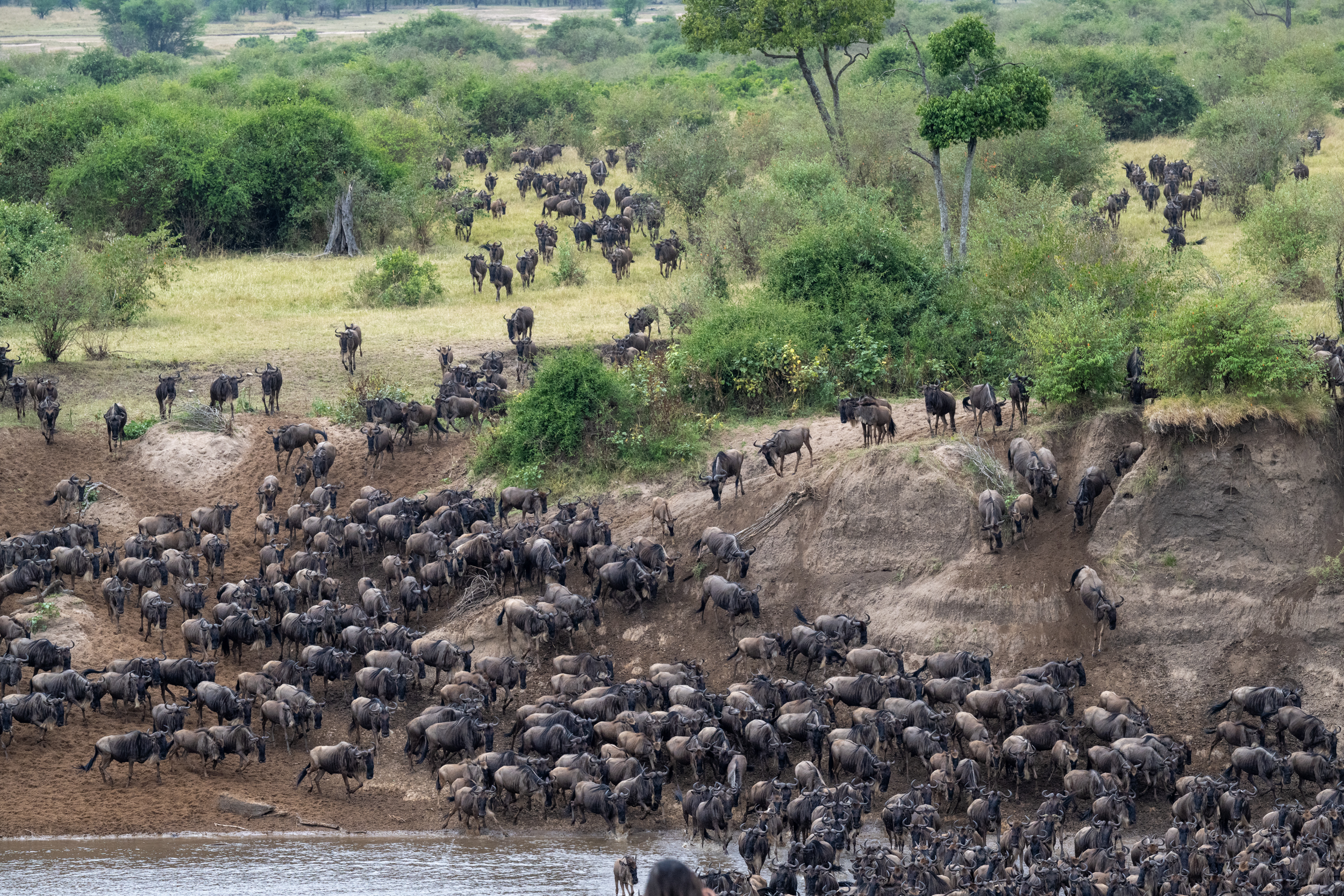
Central to the Serengeti ecosystem, wildebeest gather in July in the northern Kogatende area, close to the Mara River. They offer distinctive photographic opportunities: from long lines moving through the golden dust of the savannah to the intensity of river crossings, where movement, splashing water and tension create dynamic, dramatic scenes.
Elephant
An imposing presence along the waterways and among the Serengeti’s acacia woodland, elephant herds offer striking photographic subjects, whether backlit at dawn and dusk or surrounded by savannah dust. From close interactions between matriarchs and calves to large solitary males, they allow us to alternate intimate portraits with wider images set against the savannah landscape.
Predators
The Serengeti offers an exceptional setting for observing and photographing other key predators in the ecosystem. Cheetahs, often active during the cooler hours on the open plains and kopjes, lend themselves to simple, uncluttered portraits or sequences of movement. Spotted hyenas are opportunistic hunters, frequently at the centre of tense scenes around carcasses or as the migration passes through. In riverine areas and along the Mara, crocodiles lie in wait for crossings, while smaller carnivores include jackals and caracals.
Gallery
Itinerary
What's Included
- 6 nights in a shared tent
- Private Jeep with local guides (up to 12 game drives)
- Full board (soft drinks included)
- Private transfers
- Park fees
- Domestic flight
- Photography guidance
Not Included
- International flights
- Alcoholic drinks (at the lodge) and personal extras
- Medical/cancellation insurance (recommended)
- Single-tent supplement (on request, subject to availability)
- Anything not listed in the "What is included" section
Useful information
General information
We will be travelling during the southern hemisphere winter, when temperatures range from 5° to nearly 25° C, with marked variation throughout the day.
The activity
Together, we will explore these two magnificent areas on wildlife-tracking safaris, accompanied by professional guides. We will travel in our private Jeep, allowing us to choose our positioning for the best photographs. Two outings a day (dawn and dusk) in a private Jeep: tracking wildlife, positioning carefully and maintaining respectful distances. Image review and post-processing during the middle of the day. Evening astrophotography sessions where possible.
Clothing
• Comfortable, neutral-coloured clothing (layers to accommodate temperature changes) • Hat • Dust scarf • Sunscreen • Insect repellent
Equipment
• 70–200mm for environmental images and behaviour • Telephoto lens >400mm for close-ups and distant subjects • Fast wide-angle lens for astrophotography and night scenes • Bean bag • High-capacity memory cards
Terms and conditions
Booking terms
A 30% deposit is required to confirm your booking. Please note that the proposed itinerary may be adjusted according to weather conditions and the organisers’ recommendations.
Cancellation policy
If the organisers cancel the trip, a full refund will be issued. If a client cancels, payments already made will not be refunded.
Starting from
€5,400
per person